Bi-Fold Doors for Indoor-Outdoor Living
Disclaimer Some links on this page are Amazon affiliate links which means if you choose to make a purchase, we may earn a small commission from Amazon at no extra cost to you. We greatly appreciate your support!
Bi-fold doors have become one of the go-to ways to connect an indoor living space to a patio, kitchen, or backyard without a full renovation. This guide covers where the design actually comes from, why it works so well for indoor-outdoor spaces and tight bedrooms, and what materials to consider.
History of Bi-Fold Doors
Bi-fold doors — also called folding or concertina doors — have a longer history than most people expect. The earliest folding door concepts trace back to ancient Roman and Egyptian architecture, where large, heavy wood or metal panels were hinged together to divide spaces.
The idea took on a distinct form in Asia, particularly in Japan, where traditional houses used sliding and folding panels made of paper or wood — known as fusuma and shoji doors — that served both function and aesthetics. In Europe, bi-fold doors gained popularity during the Renaissance, often ornately carved and used to divide grand rooms in stately homes.
By the 19th century, manufacturing advances made bi-fold doors accessible to a wider range of homeowners, and the introduction of glass paneling let more natural light flow between rooms. Today, they’re a staple of modern architecture — most often used to create a seamless transition between indoor and outdoor living space.
Bi-Fold Doors as a Space-Maximizing Solution
Bi-fold doors fold back onto themselves in multiple panels, creating a wide opening without eating into interior floor space — which is what makes them so versatile across different parts of a home.
Indoor-Outdoor Connection
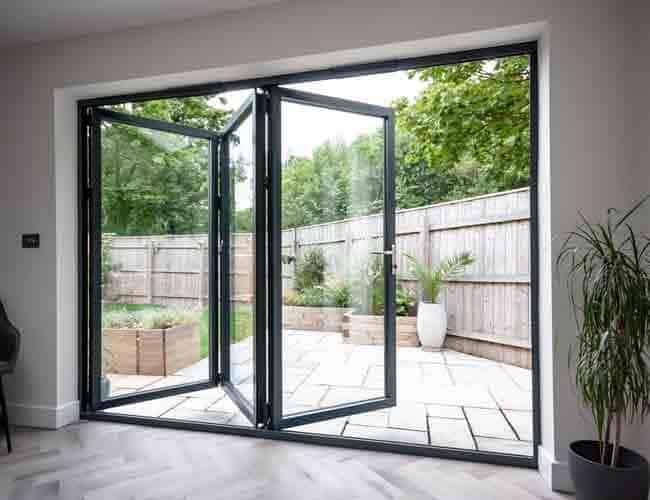
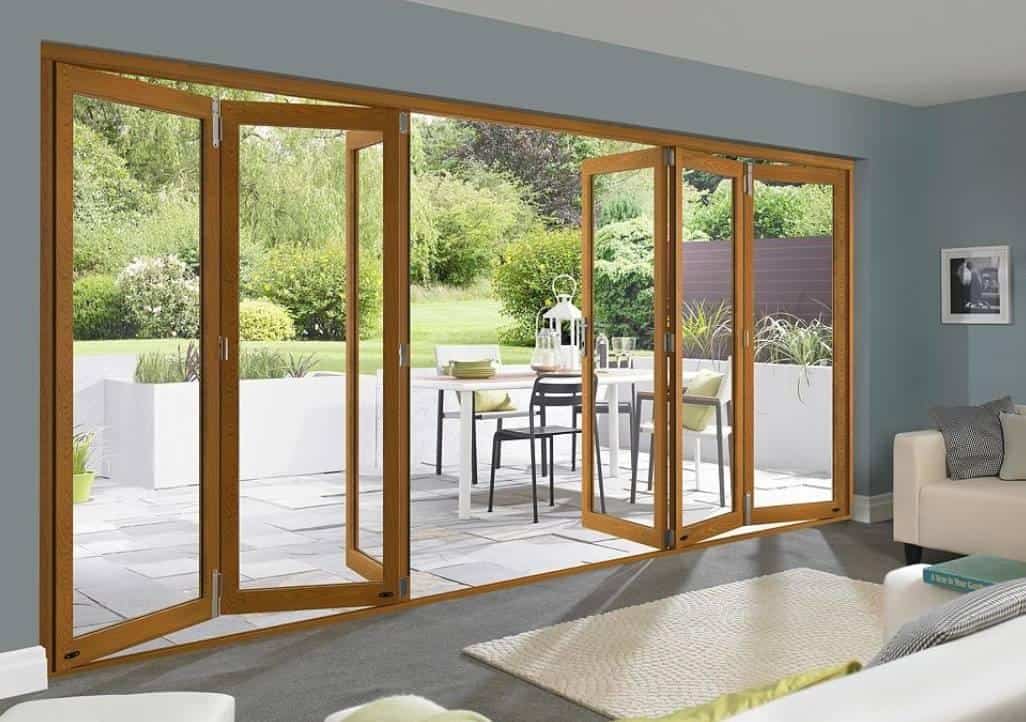
Installed between a kitchen or living room and a patio or garden, bi-fold doors let you open the space up entirely — extending the living area outdoors, letting in more natural light and airflow, and making a room feel larger without adding a single square foot.
Space Optimization in Bedrooms
In a bedroom, bi-fold doors are a practical option for wardrobe access. A standard swing door needs clearance space to open — often more than a small room can spare — while a bi-fold’s folding mechanism needs only a fraction of that, making it a solid fit for compact bedrooms.
Material Choices
Wood and glass are the most common materials for bi-fold doors. Wood brings warmth and works well with a minimalist aesthetic, while glass panels let in ample natural light and can make a space feel more open. Many bi-fold doors combine both — a wood frame paired with glass panels — for a balance of coziness and openness. Aluminum and composite options are also widely available for a more modern, low-maintenance look.
Conclusion
Bi-fold doors offer a genuinely practical way to open up a home — whether connecting an indoor space to the outdoors or making the most of a tight bedroom closet. If you’re deciding between bi-fold options more broadly, our Bifold Doors guide covers the full range of types and design considerations, and our Bifold Door Hardware guide covers everything you need for installation.
For more on doors and design, explore the rest of Door Digest.