Quick Answer
A door hinge is a mechanical device that connects a door to its frame, allowing it to open and close smoothly. In commercial doors, hinges are designed to support heavier weights, handle frequent use, and provide long-term durability.
When people ask what is a door hinge, they are typically referring to the mechanism that allows a door to open and close smoothly while supporting its weight. Understanding what is a door hinge is important when selecting the right hardware for commercial doors, especially in high-traffic applications.
What Is a Door Hinge?
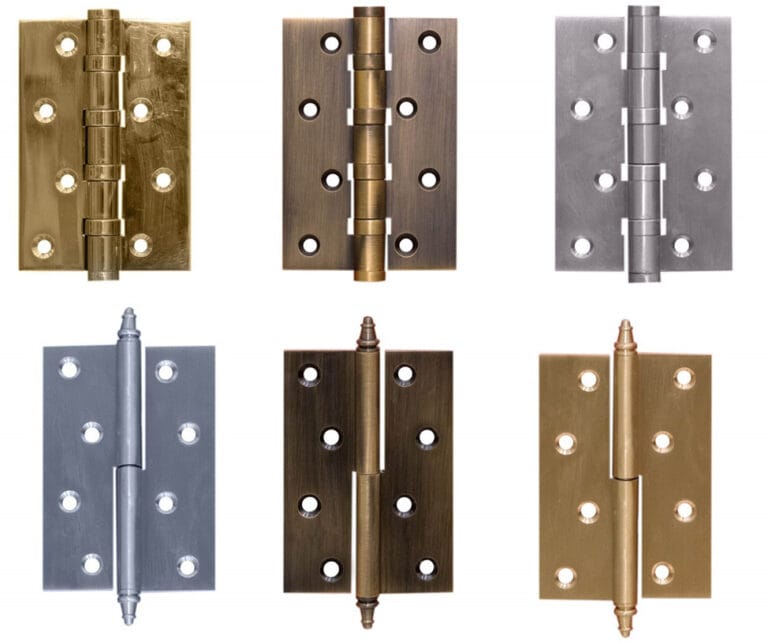
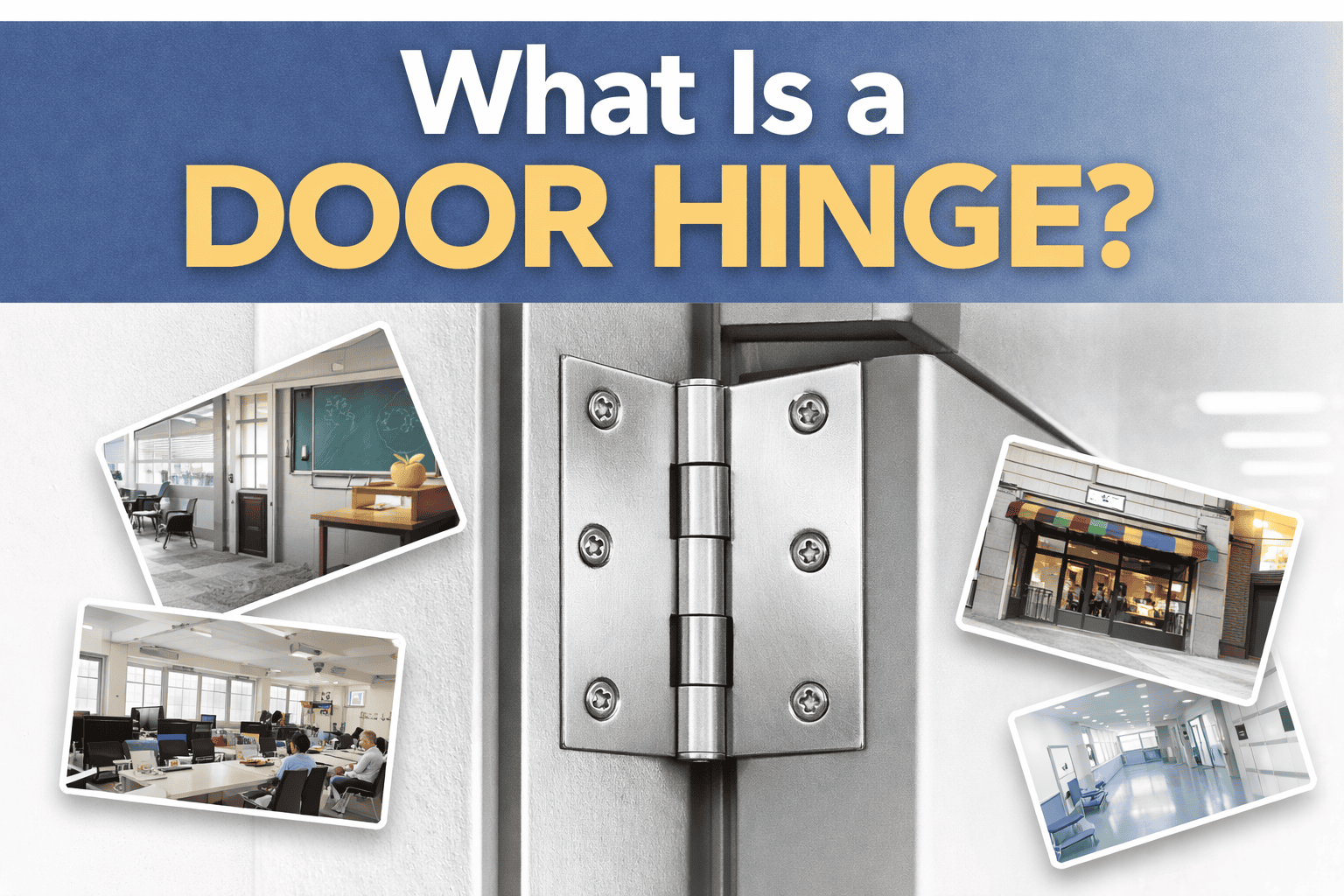
When considering what is a door hinge, it is one of the most important components in any door system. It consists of two leaves connected by a pin, allowing the door to pivot. In commercial applications, door hinges are engineered to handle higher traffic, heavier doors, and stricter performance requirements compared to residential hinges.
How a Door Hinge Works
A door hinge works by allowing rotational movement around a fixed axis. The hinge pin acts as the central pivot point, while the leaves are attached to the door and frame. When the door opens or closes, the hinge allows smooth movement while supporting the weight of the door.
Types of Door Hinges for Commercial Doors
There are several types of door hinges used in commercial applications. Butt hinges are the most common and are used for standard doors. Continuous hinges run the full height of the door and are ideal for high-traffic openings. Pivot hinges support the door from the top and bottom, while concealed hinges are used when aesthetics are important.
Butt Hinge vs Continuous Hinge
When comparing butt hinge vs continuous hinge, the key difference is how the door weight is supported. Butt hinges support the door at specific points, while continuous hinges distribute the weight across the full height of the door. For a full comparison, see our guide on continuous hinge vs butt hinge.
Materials Used in Door Hinges
Door hinges are commonly made from steel, stainless steel, or brass. Steel hinges are the most common for interior applications. Stainless steel hinges are used for exterior or high-moisture environments due to their corrosion resistance. Brass hinges are often used for decorative purposes.
Standard Door Hinge Sizes
Common hinge sizes for commercial doors include 4 inch by 4 inch for standard doors and 4.5 inch by 4.5 inch for heavier doors. Larger hinges may be required for oversized or high-weight applications. Proper sizing ensures smooth operation and prevents long-term issues.
When to Use Different Door Hinges
The type of hinge you choose depends on the application. For standard commercial doors, butt hinges are typically sufficient. For high-traffic openings, continuous hinges may provide better long-term performance. See our guide on best hinges for commercial doors for more details.
Installation and Maintenance
Proper installation is critical to hinge performance. Hinges should be aligned correctly and installed with the proper fasteners. Regular maintenance, including lubrication and inspection, helps extend the lifespan of the hinge and ensures smooth operation.
Door Hinges in Commercial Applications
Door hinges are used in a wide range of commercial environments, including office buildings, schools, hospitals, retail spaces, and industrial facilities. Selecting the right hinge helps ensure long-term reliability and performance.
Door Hinges in Real-World Applications
Understanding what is a door hinge in real-world applications helps clarify why hinge selection matters. In commercial doors, hinges must support weight, handle frequent use, and maintain alignment over time.
In many cases, selecting the right hinge improves long-term performance and reduces maintenance issues. Whether using a butt hinge, continuous hinge, or another hinge type, the goal is always the same: reliable operation and durability.
Common Problems with Door Hinges in Commercial Doors
When understanding what is a door hinge, it is also important to recognize common issues that can occur over time. Even high-quality door hinges can experience problems if they are not properly selected or installed.
One of the most common issues is door sagging, which occurs when hinges are undersized or the door weight is not properly supported. This can lead to misalignment, difficulty closing, and increased wear on the door and frame.
Another issue is hinge wear, especially in high-traffic environments. Without proper lubrication or when using plain bearing hinges in demanding applications, friction can increase and reduce the lifespan of the hinge.
Loose fasteners are also a frequent problem in commercial doors. Over time, screws can loosen due to repeated use, which affects hinge performance and door alignment. Regular inspection and maintenance can help prevent these issues.
By understanding what is a door hinge and the common problems associated with it, building owners and contractors can take proactive steps to ensure long-term performance and reliability.
Final Thoughts
Understanding what is a door hinge and how it works is essential when selecting hardware for commercial doors. The right hinge improves performance, reduces maintenance, and ensures long-term durability.