Quick Answer
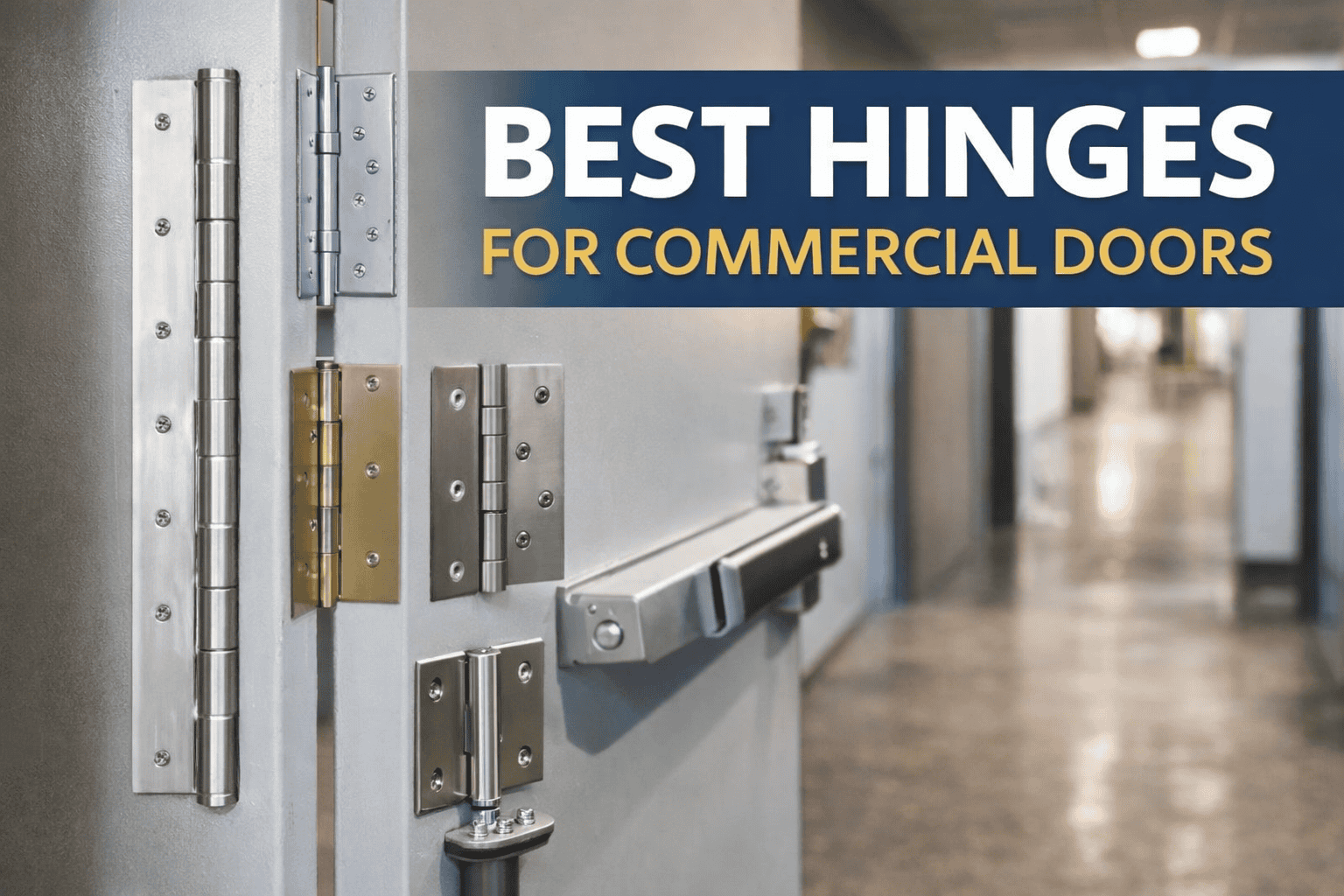
The best hinges for commercial doors depend on traffic, door weight, frame condition, and the function of the opening. For most high-traffic openings, continuous hinges are one of the best hinges for commercial doors because they distribute weight evenly and reduce long-term maintenance. For lighter-duty applications, butt hinges may still be a practical and cost-effective option.
Why the Best Hinges for Commercial Doors Matter
Choosing the best hinges for commercial doors is not just a hardware decision. It affects door alignment, durability, service calls, security, and overall opening performance. If the wrong hinge is used, the result can be sagging doors, loose fasteners, worn frames, and expensive callbacks. That is why hinge selection should match the opening rather than defaulting to whatever is cheapest or most familiar.
1. Continuous Hinges
Continuous hinges are often considered the best hinges for commercial doors in schools, hospitals, multifamily common areas, and other high-traffic buildings. They run the full height of the door, which helps distribute the weight across the entire opening.
Why Continuous Hinges Work Well
• Better weight distribution
• Improved long-term alignment
• Reduced sagging
• Fewer maintenance calls
2. Butt Hinges
Butt hinges are still among the best hinges for commercial doors in many light- to medium-duty applications. They are widely used, easy to source, and more budget-friendly upfront. A standard commercial opening may use three butt hinges, while taller or heavier doors may require four.
3. Concealed Hinges
Concealed hinges are used when appearance matters and the hinge should not be visible when the door is closed. They are common in certain architectural interiors, but they are not always the first choice for heavy-use openings.
4. Pivot Hinges
Pivot hinges support the door from the top and bottom instead of relying on a traditional hinge edge setup. They are often a strong option for oversized, heavy, or specialty doors where a standard hinge arrangement is not ideal.
5. Spring Hinges
Spring hinges are used when a door needs to close automatically. They can be effective in smaller applications, but in many commercial openings, a door closer is still the better long-term solution.
6. Electrified Hinges
Electrified hinges are one of the best hinges for commercial doors when power transfer is needed for access control hardware. These are commonly used with electrified locks, monitoring devices, or card access systems.
7. Specialty Hinges
Specialty hinges cover application-specific needs such as heavy-duty use, wide-throw requirements, security needs, or unusual frame and door conditions. When the opening is not standard, specialty hinges can become the best hinges for commercial doors.
How to Choose the Best Hinges for Commercial Doors
When selecting the best hinges for commercial doors, consider these factors first:
• Door weight
• Door width and height
• Traffic level
• Frame and reinforcement condition
• Security requirements
• Whether electrification is needed
• Expected long-term maintenance
If the opening sees constant use or abuse, continuous hinges are usually the safer long-term choice. If the opening is lighter duty and budget is a major concern, butt hinges may be sufficient.
Best Hinges for Commercial Doors: Real-World Recommendation
In real-world commercial work, the best hinges for commercial doors are usually the hinges that minimize problems over time, not just the hinges with the lowest purchase price. For many buildings, that points back to continuous hinges for high-use openings and butt hinges for more standard interior openings.
If you are comparing hinge styles directly, see our related article on continuous hinge vs butt hinge for a closer breakdown of the differences.
Final Thoughts on the Best Hinges for Commercial Doors
There is no single hinge that is best for every opening, but there is a right hinge for each application. The best hinges for commercial doors are the ones that match the job, perform reliably, and reduce long-term problems. For demanding openings, continuous hinges are often the best long-term answer. For lighter-use doors, butt hinges and other hinge types can still make sense when properly specified.