Quick Answer
When comparing a continuous hinge vs butt hinge, the continuous hinge is the better option for most commercial doors. A continuous hinge runs the full length of the door, distributes weight evenly, and usually creates fewer long-term maintenance issues. A butt hinge is more traditional and often less expensive upfront, but it tends to wear faster in high-traffic applications. For most commercial openings, especially doors that get a lot of daily use, the continuous hinge is the better long-term choice.
What Is a Continuous Hinge?
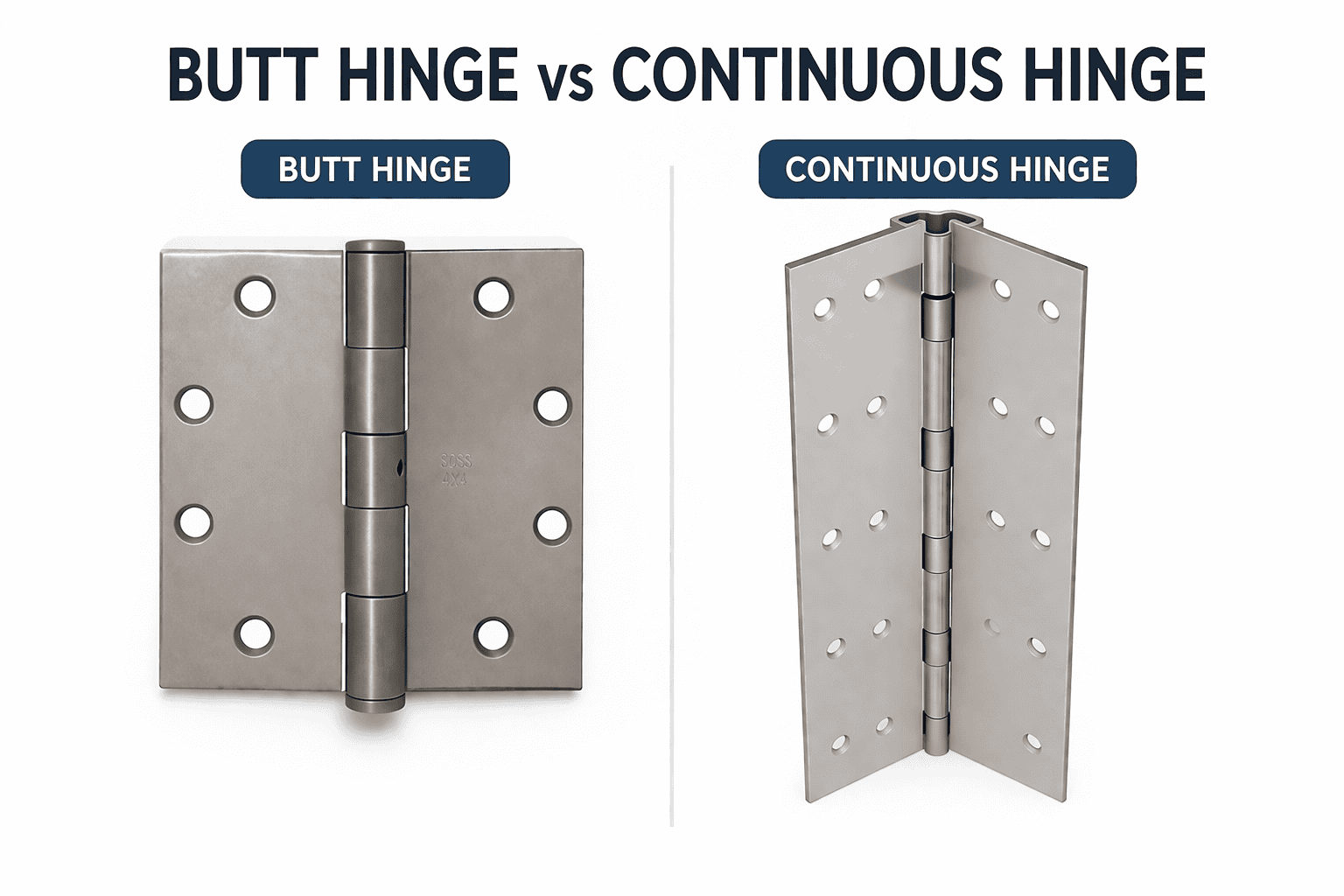
A continuous hinge, sometimes called a piano hinge, runs from the top of the door to the bottom in one continuous piece. In commercial applications, that design helps distribute the weight of the door across the entire height of the opening instead of concentrating it at three or four hinge locations.
You will commonly see continuous hinges used on schools, hospitals, multifamily common area doors, aluminum storefront doors, and other high-traffic commercial openings. They are popular because they help reduce sagging, improve alignment, and hold up better over time.
Key Benefits of a Continuous Hinge
• Even weight distribution across the entire door
• Reduced stress on the frame, reinforcement, and fasteners
• Better long-term door alignment
• Fewer maintenance calls in heavy-use environments
What Is a Butt Hinge?
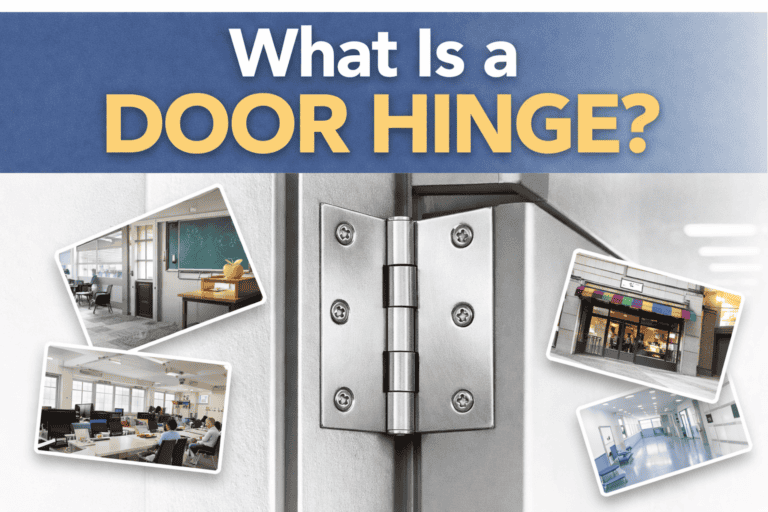
A butt hinge is the traditional hinge most people are familiar with. Instead of running the full height of the door, butt hinges are installed in a set, usually three hinges for a standard commercial door and four hinges for taller or heavier openings.
Butt hinges are still widely used and absolutely have their place. They are common in light commercial spaces, office interiors, and budget-driven projects where the opening is not expected to take a lot of abuse.
Typical Butt Hinge Setup
• 3 hinges for many standard doors
• 4 hinges for taller or heavier doors
• More common on lighter-duty openings
Continuous Hinge vs Butt Hinge: 5 Key Differences
1. Durability
This is one of the biggest differences between a continuous hinge vs butt hinge. A continuous hinge is built for heavy-duty commercial use and generally performs better when doors are opened and closed all day. A butt hinge can still perform well, but it usually shows wear faster in demanding environments.
2. Door Alignment
Continuous hinges usually do a better job maintaining alignment because the door weight is spread out over the full length of the hinge. Butt hinges place more concentrated stress at specific points, which can lead to sagging or alignment issues over time.
3. Installation
A butt hinge is more familiar to many installers and can be quicker to install. A continuous hinge can take a little more effort upfront, but that extra effort often pays off in better long-term performance.
4. Cost
A butt hinge usually costs less upfront. A continuous hinge normally costs more at the time of purchase, but in many commercial applications it can win on lifecycle cost because it reduces service calls, maintenance, and replacement issues.
5. Security and Performance
A continuous hinge can also offer performance advantages because it has fewer weak points along the hinge edge. In many cases, it creates a stronger overall opening and better long-term operation.
When to Use a Continuous Hinge
A continuous hinge is usually the better choice when the opening has high traffic, the door is heavy, the door is likely to take abuse, or long-term performance matters more than saving a little money upfront.
Good applications include:
• Schools
• Hospitals
• Multifamily common areas
• Aluminum storefront doors
• Other high-use commercial doors
When to Use a Butt Hinge
A butt hinge still makes sense in the right application. If the opening is a light-use office door, an interior commercial opening with limited traffic, or a project where budget is the main concern, butt hinges may be perfectly acceptable.
The key is understanding the tradeoff. Choosing a butt hinge may save money upfront, but it can also create more maintenance issues later if the opening gets more use than expected.
Real-World Recommendation
In most commercial applications, if you are choosing between a continuous hinge vs butt hinge, I would lean toward the continuous hinge. The extra upfront cost is usually minor compared to the value of better alignment, better durability, and fewer callbacks.
If the opening matters, the hinge choice matters. That is especially true on doors that are opened constantly or where long-term reliability is important.
Frequently Asked Questions
Are continuous hinges better than butt hinges?
For many commercial doors, yes. Continuous hinges are generally better in high-traffic applications because they provide better support, alignment, and durability.
Do continuous hinges cost more?
Yes, continuous hinges usually cost more upfront. However, they often reduce long-term maintenance costs, which can make them the better overall value. When choosing a continuous hinge vs butt hinge for commercial doors, cost consideration can make an impact on the final decision.
Can you replace butt hinges with a continuous hinge?
Yes, in many cases you can replace butt hinges with a continuous hinge, but the door and frame may need to be evaluated first. Hole patterns, reinforcements, door prep, and frame condition all matter.
Conclusion
When comparing a continuous hinge vs butt hinge, both products have their place, but they are not equal in long-term performance. Butt hinges are simple and cost-effective. Continuous hinges are more durable, more reliable, and better suited for demanding commercial openings. For most commercial doors, especially high-traffic doors, a continuous hinge is the better long-term solution.