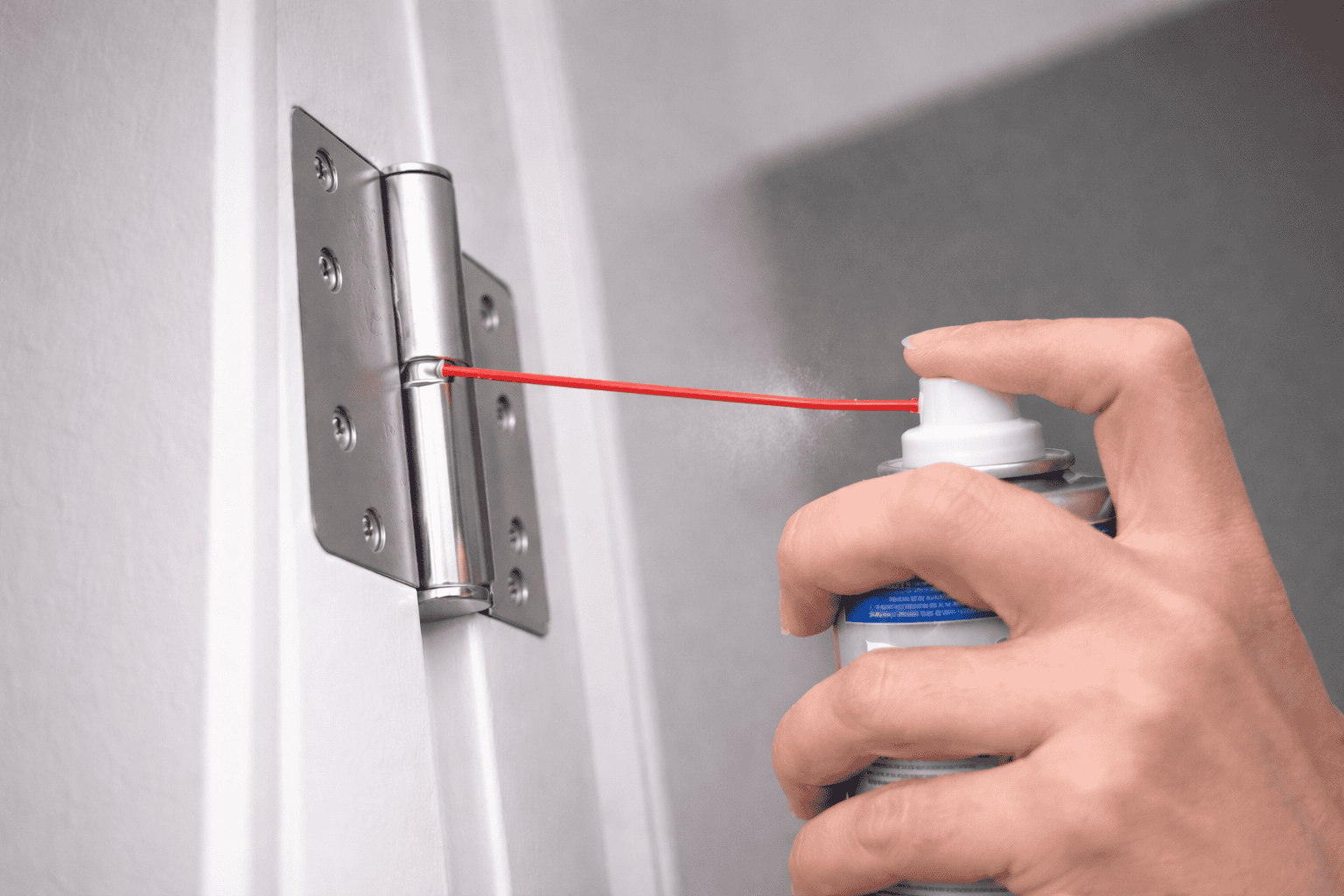
10 Best Door Lubricants for Smooth Operation
Disclaimer Some links on this page are Amazon affiliate links which means if you choose to make a purchase, we may earn a small commission from Amazon at no extra cost to you. We greatly appreciate your support!
A squeaky hinge may seem like a minor annoyance, but the wrong lubricant can create a larger maintenance problem. Heavy oils can attract dust, penetrating products may evaporate too quickly, and grease can stain a finished door if it is overapplied. The best door lubricant depends on the type of hardware, how often the door is used, and whether the opening is indoors, outdoors, residential, commercial, or part of a garage-door system.
For most interior door hinges, a clean silicone spray or a few drops of quality multipurpose oil works well. Exterior, heavy, and high-use hinges usually benefit from white lithium grease or another durable synthetic lubricant. Rusted hinge pins should first be loosened with penetrating oil and then lubricated with a longer-lasting product. Lock cylinders require special care: use only the lubricant recommended by the lock manufacturer, which may be a graphite-free dry lock lubricant, a light oil, or another cylinder-specific product.
This guide explains which lubricants work best, where each product should be used, what to avoid, and how to maintain residential and commercial door hardware without creating unnecessary buildup.
Quick Answer: What Is the Best Door Lubricant?
| Door or Hardware Application | Best Lubricant Type | Why It Works |
|---|---|---|
| Interior door hinges | Silicone spray or light multipurpose oil | Clean application, low mess, and enough protection for normal residential use |
| Exterior door hinges | White lithium grease or water-resistant synthetic lubricant | Clings to metal and provides better protection against moisture and corrosion |
| Heavy or high-traffic commercial hinges | Manufacturer-approved synthetic grease or white lithium grease | Handles frequent cycles and remains in place longer than a thin oil |
| Rusty or seized hinge pins | Penetrating oil, followed by grease or silicone | Penetrating oil frees the part; the second lubricant provides lasting protection |
| Door lock cylinders | Manufacturer-approved dry lock lubricant or light cylinder lubricant | Designed to penetrate small internal components without heavy buildup |
| Garage-door hinges, rollers, springs, and chains | Dedicated garage-door lubricant | Formulated for overhead-door components and wide temperature changes |
| Sliding door tracks | Dry silicone or PTFE-based lubricant | Reduces friction without leaving a thick dirt-catching film on the track |
If the hinge is only squeaking, start with the least messy product suitable for the opening. If the door is sagging, binding, scraping the frame, or pulling screws loose, lubrication alone will not solve the underlying problem. Review our guide to fixing squeaky door hinges and inspect the hinge condition before repeatedly adding more lubricant.
Why Door Hinges Squeak
A standard butt hinge is made of interlocking knuckles joined by a hinge pin. Every time the door opens or closes, the knuckles rotate around that pin. Over time, the original lubricant migrates away, collects debris, dries out, or is displaced by moisture. The metal surfaces then rub together and create the familiar squeak.
Common causes include:
- Normal wear: Repeated door cycles gradually remove the factory-applied lubricant.
- Dust and debris: Fine particles work into the hinge knuckles and increase friction.
- Moisture: Exterior exposure, cleaning chemicals, or humidity can promote corrosion.
- Paint contamination: Paint on a hinge pin or between knuckles may cause binding and noise.
- Misalignment: A sagging or poorly fitted door can place side pressure on the hinges.
- Worn components: Elongated knuckles, bent pins, worn bearings, or loose fasteners can produce noise that lubricant only temporarily hides.
Lubricant creates a film between the moving surfaces, reducing friction, noise, heat, and wear. However, lubrication should be treated as one part of door maintenance—not as a cure for damaged or incorrectly selected hardware. If the hinge is undersized for the door, compare the opening to our door hinge sizing guide.
The 10 Best Door Lubricants and When to Use Them
1. Silicone Spray Lubricant
Silicone spray is the best all-around choice for many interior residential hinges because it applies in a thin film, resists moisture, and usually leaves less visible residue than heavy grease. It is also useful on certain sliding tracks, rollers, weatherstripping interfaces, and mixed-material components when the product label permits those uses.

WD-40 Specialist Silicone, for example, is designed to leave a clear lubricating film that resists water and helps protect against wear and corrosion. The narrow spray straw makes it easier to place lubricant directly at the hinge knuckles instead of coating the entire hinge and door face.
Best for: Interior hinges, light residential hardware, selected sliding components, and locations where a clean application matters.
Watch for: Overspray on flooring, painted surfaces, or areas that may later need refinishing. Always test compatibility with nearby finishes.
2. White Lithium Grease
White lithium grease is one of the most effective choices for exterior hinges, heavy doors, and high-use openings. It is thicker than silicone spray or household oil, so it remains on the hinge pin and inside the knuckles longer. It also provides a useful barrier against moisture and corrosion.

Aerosol white lithium grease like WD-40 Specialist White Lithium Grease is convenient when the hinge pin cannot be removed. Tube grease gives better control when the pin can be taken out and coated lightly by hand. The goal is a thin, even film—not a large bead of grease around the hinge.
Best for: Exterior doors, commercial butt hinges, gate hinges, heavy residential doors, and high-cycle openings.
Watch for: Visible residue, drips, and dirt accumulation when too much is applied. Wipe away all excess after cycling the door.
3. Multipurpose Drip Oil
A quality multipurpose oil is an inexpensive and effective door hinge lubricant when applied sparingly. Products with a precision drip spout are often cleaner than aerosol sprays because the oil can be placed directly at the hinge-pin joint. A few drops may be all that is needed for a typical interior door.
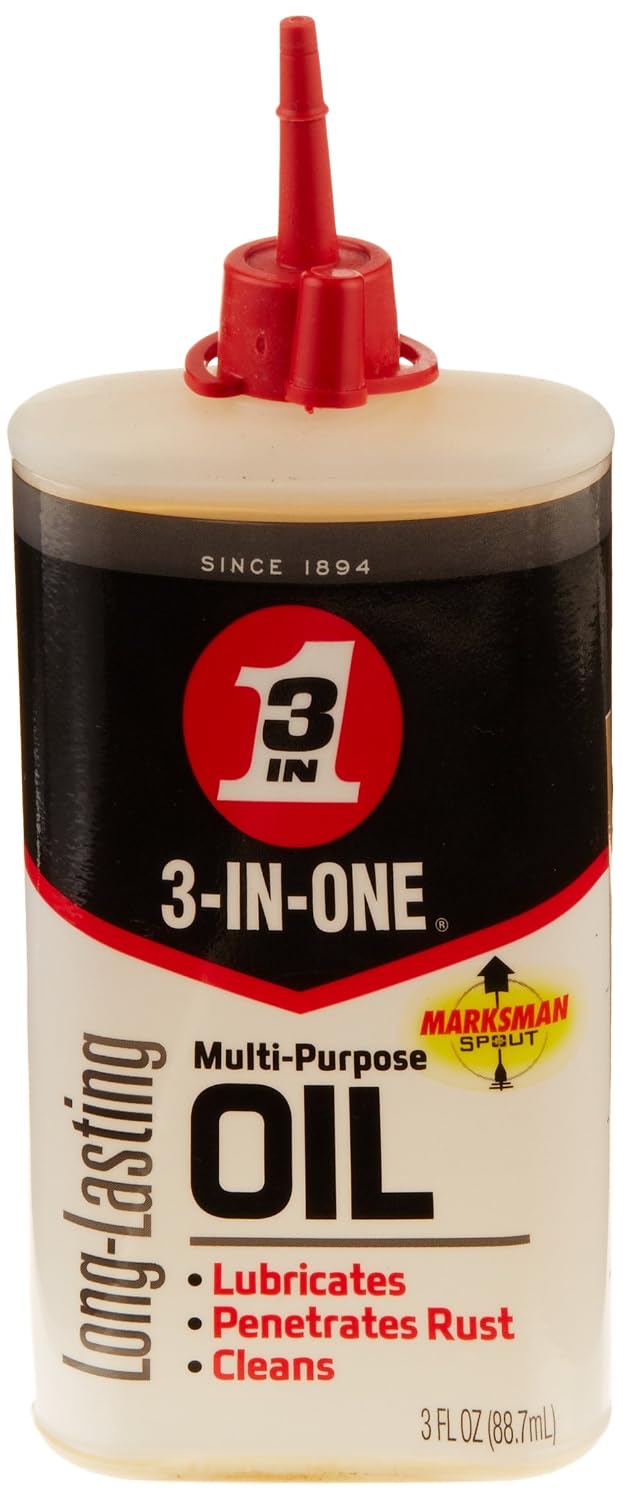
3-IN-ONE Multi-Purpose Oil is one common example. Light oils penetrate easily and work quickly, but they generally do not remain in place as long as grease on exterior or high-cycle hinges.
Best for: Residential interior hinges, small moving hardware, and precise maintenance without overspray.
Watch for: Oil migration down the hinge stile. Use only a few drops and protect the floor below.
4. Dedicated Garage-Door Lubricant
A sectional garage door is not maintained exactly like a swinging entry door. It contains hinges, rollers, bearings, springs, chains, pulleys, and other components that operate over a wide temperature range. A dedicated garage-door lubricant is normally a better choice than a general household spray.
3-IN-ONE Garage Door Lube is formulated for garage-door hinges, chains, pulleys, latches, and related moving components. Follow the garage-door and opener manufacturers’ instructions, especially around springs and high-tension parts.
Best for: Garage-door hinges, roller bearings, springs, chains, pulleys, and latches where the manufacturer permits lubrication.
Watch for: Spraying the entire track surface. Many garage-door tracks should be cleaned rather than coated with oily lubricant because residue can collect debris and interfere with roller movement.
5. Penetrating Oil
Penetrating oil is designed to work into rusted threads, frozen hinge pins, and corroded joints. It is the right first step when a hinge pin will not move or the hinge is partially seized. It is not usually the best final lubricant because its primary purpose is penetration and loosening rather than long-term film strength.
Apply a small amount, allow time for it to work, and gently cycle the door or tap the hinge pin. Once the pin is free, remove the loosened rust and contamination. Finish with white lithium grease, synthetic grease, or another longer-lasting hinge lubricant.
Best for: Rusted hinge pins, seized fasteners, corroded joints, and hinges that cannot initially be disassembled.
Watch for: Staining and runoff. Penetrating oils can travel farther than expected, so protect painted surfaces and flooring.
6. Synthetic Grease
Synthetic grease can provide excellent long-term lubrication for heavy doors and frequently operated hardware. Compared with light oil, it is less likely to run out of the hinge and may perform better across temperature changes. Some synthetic greases also offer good water resistance and compatibility with a wide variety of metals.
The key is compatibility. Commercial hinges may contain ball bearings, concealed bearings, polymer components, or factory-applied lubricants. Use the hinge manufacturer’s maintenance instructions whenever they are available.
Best for: Heavy-duty hinges, high-traffic openings, exterior applications, and equipment-grade door hardware.
Watch for: Mixing incompatible grease types. When servicing specialized commercial hardware, clean the old lubricant and follow the manufacturer’s specification.
7. Dry PTFE Lubricant
Dry PTFE lubricant leaves a low-friction film with less oily residue than traditional wet lubricants. It is useful on some sliding-door tracks, rollers, latches, and lock components because it reduces friction without creating a thick surface that captures dust.
Not every dry lubricant is appropriate for every material, so check the product label before applying it to plastics, painted finishes, weather seals, or lock cylinders.
Best for: Sliding tracks, clean indoor applications, selected latches, and manufacturer-approved lock maintenance.
Watch for: Solvent compatibility and overspray. Let the carrier evaporate before putting the component back into service.
8. Graphite-Free Dry Lock Lubricant
Modern lock cylinders should not automatically be filled with graphite. Different cylinder manufacturers use different materials and factory lubricants, and excess graphite can accumulate inside the plug and pin chambers. A graphite-free product specifically labeled for locks is often the cleaner choice when the manufacturer allows it.
3-IN-ONE Lock Dry Lube is one example of a graphite-free lock lubricant intended to penetrate the mechanism and leave a dry protective film. Allegion also notes that lubricant practices can differ by cylinder product and production period, which reinforces the importance of following the exact lock manufacturer’s instructions.
Best for: Key cylinders, padlocks, and lock mechanisms when a dry lock lubricant is approved.
Watch for: Overapplication. A brief, controlled application is better than flooding the keyway.
9. Silicone Oil
Silicone oil provides the advantages of silicone lubrication without aerosol overspray. A precision applicator can place one or two drops exactly at the moving joint. This is useful around finished woodwork, decorative hardware, and occupied spaces where a large spray pattern would be difficult to control.
Best for: Interior decorative hinges, controlled applications, small rollers, and light-duty moving parts.
Watch for: Applying too much. Even silicone oil can migrate and leave a visible streak if the hinge is saturated.
10. Food-Grade Lubricant for Special Environments
Doors and hardware in commercial kitchens, food-processing spaces, laboratories, or other controlled environments may require a lubricant with specific approvals or facility acceptance. A food-grade lubricant may be necessary where incidental contact is possible, but the correct selection depends on the opening, hardware manufacturer, sanitation program, and governing facility requirements.
Best for: Hinges and moving hardware in food-service or controlled environments where an approved product is required.
Watch for: Assuming “food grade” means appropriate for every door component. Confirm compatibility, listing requirements, and sanitation procedures before use.
Silicone Spray vs. White Lithium Grease
Silicone spray and white lithium grease are the two most useful general-purpose options for door hinges, but they serve different needs.
| Factor | Silicone Spray | White Lithium Grease |
|---|---|---|
| Cleanliness | Usually cleaner and less visible | Thicker and more noticeable |
| Longevity | Good for normal residential use | Usually lasts longer under heavier use |
| Moisture resistance | Good | Very good when properly applied |
| Dirt attraction | Lower when applied as a thin film | Can collect dirt if overapplied |
| Best application | Interior hinges and clean light-duty maintenance | Exterior, heavy, and high-cycle hinges |
| Application control | Easy with a straw, but overspray is possible | Easy by tube or aerosol; excess must be wiped away |
Choose silicone spray when appearance and cleanliness are the priorities. Choose white lithium grease when longer service life, moisture protection, and heavier loads matter more.
Is Regular WD-40 Good for Door Hinges?
Regular WD-40 Multi-Use Product can help displace moisture, loosen light corrosion, and temporarily quiet a hinge. However, it is not usually the best long-term door hinge lubricant. Its cleaning and penetrating characteristics can solve the immediate symptom without leaving the more durable lubricating film provided by grease or a dedicated silicone lubricant.
Use it as a first step when a hinge is dirty or beginning to rust, then wipe away the loosened contamination and apply the correct long-term lubricant. For routine interior hinge maintenance, start with silicone spray or a few drops of multipurpose oil instead.
How to Lubricate a Door Hinge Correctly
- Identify the noisy hinge. Open and close the door slowly while listening near each hinge. Noise can travel through a hollow metal door or frame, so confirm the source before applying anything.
- Protect the surrounding surfaces. Place cardboard or a towel beneath the hinge and shield nearby paint, wall coverings, flooring, and weatherstripping.
- Inspect the hinge. Check for loose screws, a bent pin, rust, metal shavings, sagging, or gaps between the hinge leaves. Repair mechanical problems before relying on lubricant.
- Clean the exposed area. Remove dust, old grease, and loose corrosion with a clean rag. Avoid forcing debris deeper into the knuckles.
- Raise or remove the hinge pin when practical. Close and support the door, then tap the pin upward with an appropriate punch. Not every hinge pin is removable; some commercial and security hinges use non-removable pins.
- Apply a small amount of lubricant. Coat the pin lightly or direct the spray straw at the junction between the pin and knuckles. More product does not mean better lubrication.
- Reinstall the pin. Seat it fully without damaging the hinge finish.
- Cycle the door. Open and close the door 10 to 15 times to distribute the lubricant.
- Wipe away excess. Clean all drips and residue from the hinge, door, frame, and floor.
If the squeak returns immediately, the hinge may be worn, misaligned, or overloaded. Our guide to replacing door hinges explains when lubrication is no longer enough.
Lubricants and Household Products to Avoid
Several improvised products may stop a squeak for a few hours but create sticky buildup, odors, staining, or accelerated dirt accumulation.
- Cooking oil, vegetable oil, or olive oil
- Butter, shortening, or animal fat
- Petroleum jelly applied in heavy amounts
- Used motor oil
- Chain grease not approved for the hinge materials
- Wax that hardens inside the knuckles
- Powdered products placed into a cylinder without manufacturer approval
- Any aerosol that may damage paint, rubber, plastic, or fire-door labels
Never mix products casually. Solvents in one lubricant may wash away or react with the existing grease. When the prior product is unknown, clean the component as thoroughly as practical and use a compatible lubricant recommended by the hardware manufacturer.
Commercial Door Lubrication and Maintenance
Commercial doors may cycle hundreds or thousands of times per day. Schools, hospitals, office buildings, retail entrances, and multifamily properties place far greater demands on hinges than a typical residential bedroom door. Lubrication can extend hardware life, but it must be paired with inspection and adjustment.
During routine maintenance, inspect:
- Loose or missing hinge fasteners
- Black metal residue around hinge knuckles, which may indicate wear
- Elongated holes, bent pins, cracked leaves, or worn bearings
- Door sag, uneven clearances, and contact with the frame or threshold
- Corrosion caused by weather, cleaning chemicals, or dissimilar metals
- Closer adjustment, latch engagement, and smooth closing operation
- Security screws and non-removable hinge pins on outswinging openings
- Fire-door labels and listed hardware that must remain intact
Do not lubricate a failed hinge to postpone replacement. A worn hinge can affect door alignment, latch engagement, closer performance, accessibility, and the operation of a fire-rated assembly. Review our guide to commercial door hinges for an overview of hinge construction and applications.
For heavy openings, verify that the hinge type is appropriate for the door weight, width, frequency, and environmental exposure. Our articles on the best hinges for commercial doors and hinges for heavy doors explain when ball-bearing hinges, continuous hinges, pivots, or other solutions may be more appropriate.
Special Considerations for Continuous Hinges
Continuous geared hinges and pin-and-barrel continuous hinges distribute the door load along most of the height of the opening. Their maintenance requirements differ from standard butt hinges. Some are designed with self-lubricating bearings or manufacturer-specific wear surfaces and should not be coated with general-purpose grease.
Always follow the continuous-hinge manufacturer’s instructions. To understand the differences, see our comparison of continuous hinges versus butt hinges.
Fire-Rated Door Assemblies
Maintenance on a fire-rated opening must preserve the listed door, frame, and hardware assembly. Do not drill, grind, remove labels, disable self-closing hardware, or substitute unapproved components while addressing a noisy hinge. Lubrication should never be used to conceal a door that fails to close and latch properly.
If a rated opening is binding, sagging, or failing to latch, have it evaluated by qualified door and hardware personnel. The underlying issue may involve hinge wear, frame movement, closer adjustment, incorrect clearances, or hardware selection.
How Often Should Door Hardware Be Lubricated?
| Opening Type | Suggested Inspection Frequency | Lubrication Approach |
|---|---|---|
| Low-use interior residential door | Annually or when noise develops | Lubricate only as needed |
| Exterior residential entry | Every 6 to 12 months | Inspect for corrosion and lubricate when the film has diminished |
| High-use commercial opening | Monthly to quarterly, depending on traffic | Follow a preventive-maintenance schedule and manufacturer instructions |
| Coastal, pool, or corrosive environment | More frequently | Clean contamination and use a compatible corrosion-resistant lubricant |
| Garage door | Based on manufacturer guidance, commonly once or twice per year | Lubricate approved moving components only |
| Lock cylinder | Only when operation becomes rough or the manufacturer specifies service | Use a cylinder-specific product sparingly |
Lubricating on a fixed calendar without inspecting the hardware can lead to buildup. The better practice is to inspect, clean, and lubricate only where needed.
When Lubricant Will Not Fix the Door
Stop adding lubricant and investigate further when you notice any of the following:
- The door drops when opened or must be lifted to latch
- Hinge screws repeatedly loosen or spin in stripped holes
- The hinge leaf is cracked, bent, or pulling away from the door or frame
- There is visible metal powder around a bearing hinge
- The door rubs the head, jamb, threshold, or adjacent flooring
- The hinge pin moves up after only a few cycles
- A fire door does not close and latch from every open position
- A lock remains difficult to operate after approved cylinder lubrication
- A closer arm, pivot, or continuous hinge is making the noise rather than the butt hinge
These symptoms point to wear, misalignment, fastener failure, or incorrect hardware. Lubrication may temporarily reduce the sound while the actual condition continues to worsen.
Frequently Asked Questions About Door Lubricants
What is the best lubricant for squeaky door hinges?
For a typical interior residential hinge, silicone spray or a small amount of multipurpose oil is usually the best choice. For exterior, heavy, or high-use hinges, white lithium grease or a compatible synthetic grease generally lasts longer.
Is silicone spray or lithium grease better for door hinges?
Silicone spray is cleaner and works well for light-duty interior hinges. White lithium grease is thicker, more water resistant, and better suited to exterior doors, heavy doors, and high-cycle commercial hinges.
Can I use regular WD-40 on a squeaky hinge?
Regular WD-40 can loosen corrosion and quiet a hinge temporarily, but a dedicated silicone lubricant, light oil, or white lithium grease is normally better for long-term lubrication. Clean the hinge after using a penetrating or water-displacing product and apply the appropriate final lubricant.
What is the best lubricant for a rusty door hinge?
Use penetrating oil first to loosen the rusted pin or joint. After the hinge moves freely, remove loose corrosion and finish with white lithium grease or another water-resistant hinge lubricant.
Should I use graphite in a door lock?
Not automatically. Some older locks and manufacturer instructions may call for graphite, while many modern products use graphite-free dry lubricant or a specific light oil. Check the lock or cylinder manufacturer’s maintenance instructions before adding any product.
Can I use olive oil or cooking spray on a door hinge?
No. Food oils oxidize, become sticky, collect dirt, and can create odors or stains. Use a mechanical lubricant designed for hinges and moving hardware.
Why does my door still squeak after lubrication?
The noise may be caused by a bent pin, worn bearing, loose hinge, door sag, frame contact, closer arm, pivot, or another moving component. Clean the hinge and inspect the full opening instead of repeatedly adding more lubricant.
How much lubricant should I apply?
Use only enough to create a thin film on the pin and bearing surfaces. One or two drops of oil or a short, controlled spray is often sufficient. Cycle the door and wipe away all visible excess.
Final Recommendation
The best door lubricant is the one matched to the hardware and operating environment. Use silicone spray or precision-applied multipurpose oil for most interior hinges. Choose white lithium grease or compatible synthetic grease for exterior, heavy, and high-traffic hinges. Use penetrating oil only to free rusted components, then follow it with a durable lubricant. For garage doors and lock cylinders, choose products specifically formulated for those systems and follow the manufacturer’s instructions.
Good maintenance requires more than stopping a squeak. Clean the hinge, inspect the fasteners, verify door alignment, use the smallest effective amount of lubricant, and replace worn hardware before it affects the rest of the opening. For additional guidance, review Door Digest’s complete article on choosing the right hinges for doors.
For more on doors and hardware, explore the rest of Door Digest.