What Is A Continuous Hinge?
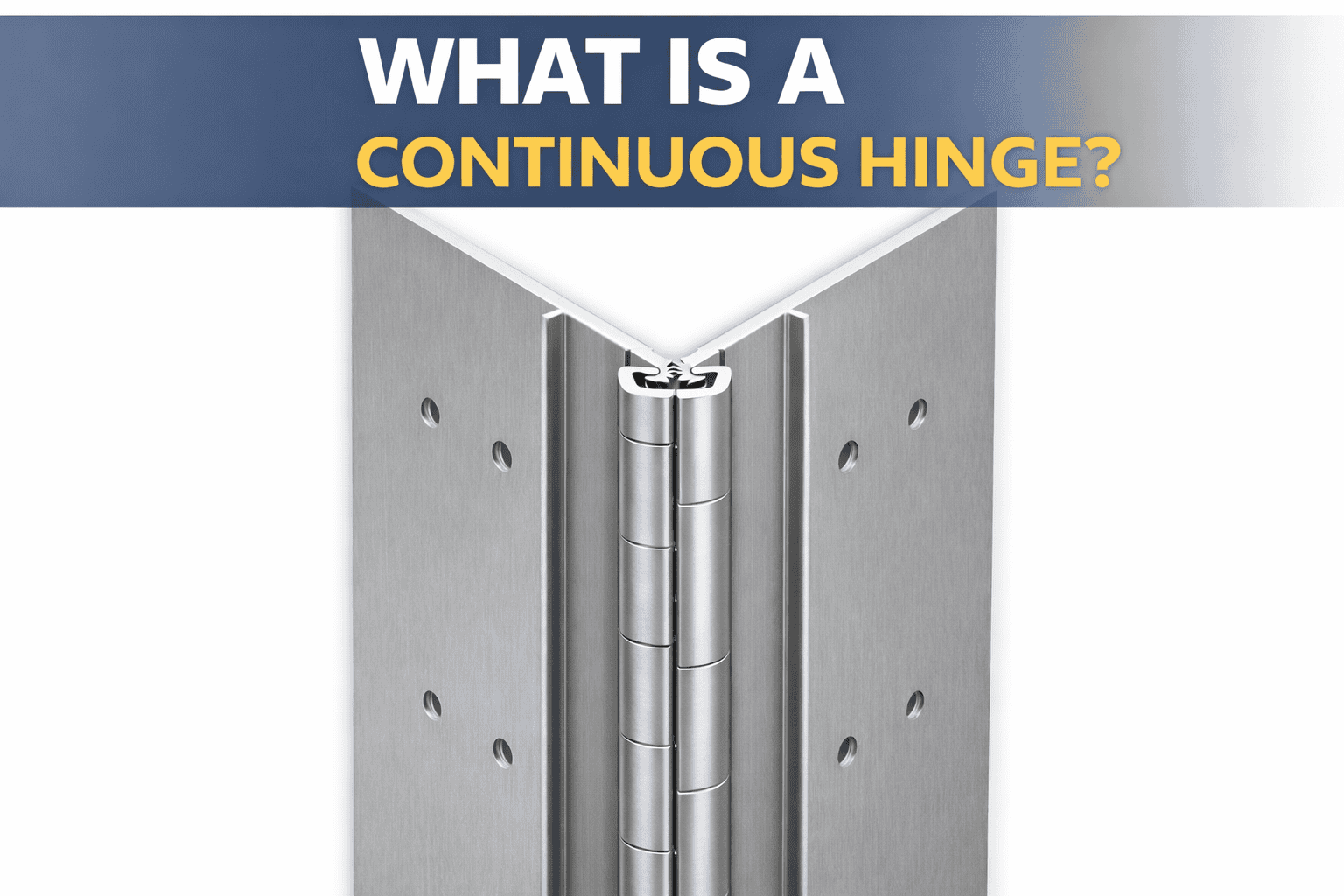
A continuous hinge is a full-length hinge that runs from the top of a door to the bottom. It distributes the weight of the door evenly across the entire frame, making it one of the most durable and reliable hinge options for commercial doors, especially in high-traffic environments.
Often called a piano hinge, is designed to support a door along its entire height instead of at a few specific points like traditional butt hinges. This design significantly reduces stress on the door, frame, and fasteners.
In commercial door applications, a continuous hinge is commonly used where durability and long-term performance are critical. You will often see continuous hinges in schools, hospitals, multifamily buildings, and other high-use facilities.
Why Continuous Hinges Are Used on Commercial Doors
There are several reasons why a continuous hinge is considered one of the best choices for commercial doors.
1. Better Weight Distribution
A continuous hinge spreads the door weight across the full height of the opening. This reduces concentrated stress points that can cause sagging over time.
2. Improved Door Alignment
Because the hinge supports the entire door, alignment is easier to maintain. This helps prevent gaps, dragging, and hardware issues.
3. Reduced Maintenance
Continuous hinges often lead to fewer service calls because they are less likely to loosen or wear unevenly compared to traditional hinge setups.
4. Longer Lifespan
In high-traffic applications, continuous hinges typically last longer than standard butt hinges, making them a better long-term investment.
Continuous Hinge vs Butt Hinge
When comparing a continuous hinge vs butt hinge, the main difference is how the load is supported. A butt hinge supports the door at specific points, while a continuous hinge supports it along the entire edge.
If you want a full comparison, see our guide on continuous hinge vs butt hinge for commercial doors.
Where Continuous Hinges Are Most Commonly Used
A continuous hinge is commonly used in the following applications:
• Schools
• Hospitals
• Multifamily buildings
• Aluminum storefront doors
• High-traffic commercial openings
When to Use a Continuous Hinge
You should consider using a continuous hinge when:
• The door is heavy
• The opening has high traffic
• Long-term durability is important
• You want to reduce maintenance issues
• Door alignment needs to be maintained over time
Are Continuous Hinges Worth It?
In most commercial applications, a continuous hinge is worth the investment. While it may cost more upfront, it often reduces long-term maintenance costs and improves overall door performance.
Continuous Hinges vs Other Hinge Types in Real Applications
When evaluating what is a continuous hinge in real-world commercial door applications, it becomes clear that continuous hinges are often chosen for durability and long-term performance rather than just initial cost.
Compared to traditional hinge types, a continuous hinge helps prevent door sagging and reduces stress on the frame over time. This is especially important in high-traffic environments such as schools, hospitals, and multifamily buildings.
Understanding what is a continuous hinge and when to use it allows contractors, architects, and building owners to make better hardware decisions. In many cases, a continuous hinge provides a more reliable solution than standard butt hinges, particularly when long-term maintenance and performance are key concerns.
Continuous Hinge for Commercial Doors: Final Considerations
When evaluating what is a continuous hinge for commercial doors, it is important to look beyond just the initial cost. A continuous hinge is designed to improve long-term performance, reduce maintenance, and keep doors properly aligned over time.
In many commercial door applications, a continuous hinge becomes the preferred option because it distributes the door weight evenly across the entire frame. This is especially important in high-traffic environments where standard hinge types may wear out faster.
If you are specifying hardware or working on a project, understanding what is a continuous hinge and how it performs compared to other hinge types can help you make better long-term decisions. In most cases, a continuous hinge provides better durability and reliability than traditional butt hinges.