Pivot Doors
Disclaimer Some links on this page are Amazon affiliate links which means if you choose to make a purchase, we may earn a small commission from Amazon at no extra cost to you. We greatly appreciate your support!
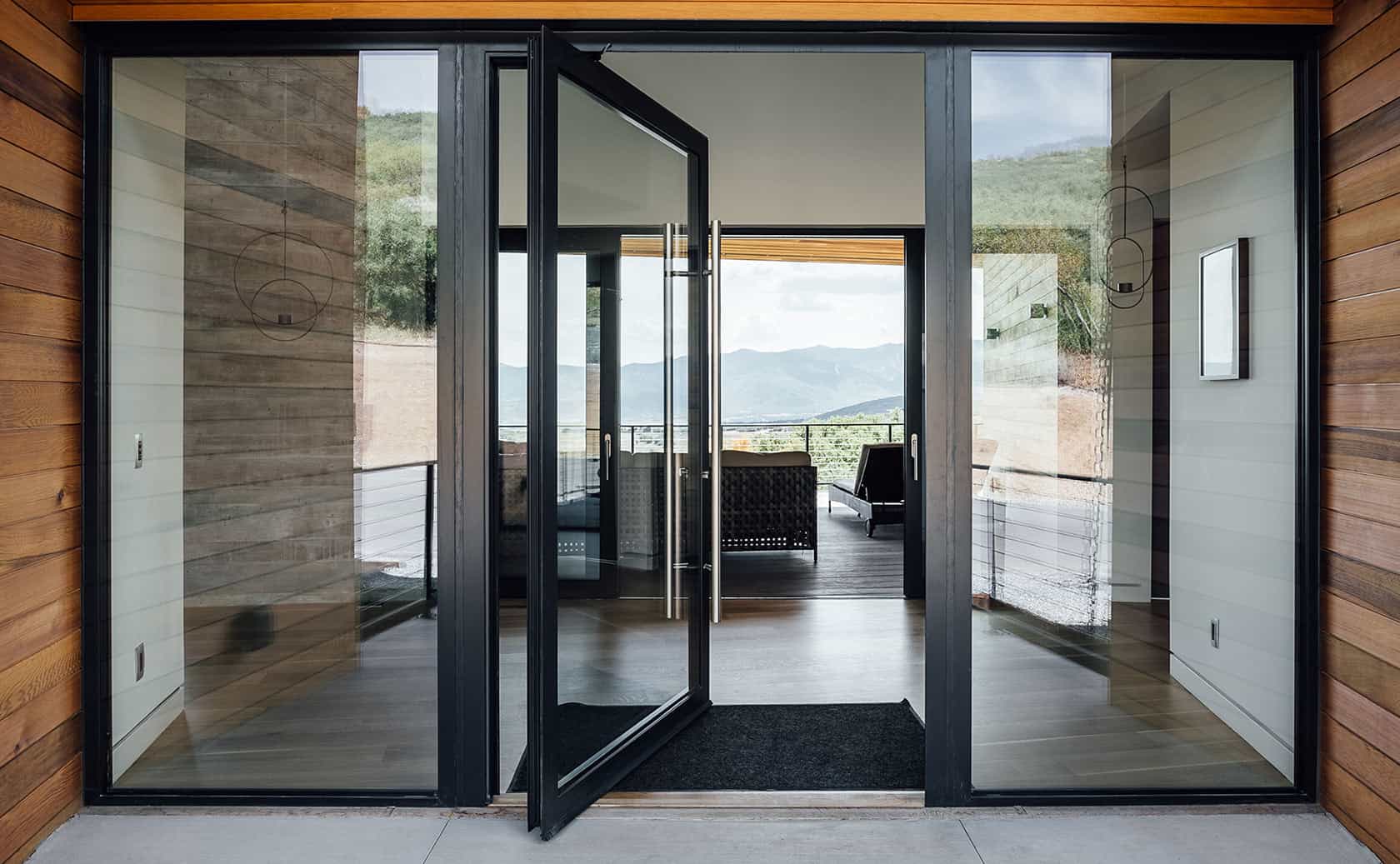
A pivot door rotates on a pivot point near its center — usually a box in the floor and a corresponding point in the top jamb — rather than swinging on side hinges like a traditional door. That difference gives pivot doors a distinct look and lets them handle much larger, heavier panels than hinged doors typically can.
A Brief History of Pivot Doors
Pivot doors are actually one of the oldest door mechanisms, not a purely modern invention. Ancient Egyptian, Greek, and Roman builders used stone pivots to support large, heavy doors — a mechanism documented as far back as these early civilizations, where pivots served both structural and decorative roles. Pivots also appeared in palace gates in China during the Tang Dynasty. The mechanism has simply been refined over centuries, moving from stone to modern engineered hardware capable of supporting doors weighing well over 1,000 pounds.
Design and Aesthetics
A pivot door’s central hinge point creates a clean, seamless look, since it eliminates the need for a traditional frame and casing. That, combined with the ability to build much larger panels than hinged doors allow, is what gives pivot doors their signature grand-entrance feel — the door can be sized to match minimalist, industrial, or almost any architectural style, in a wide range of materials, colors, and finishes.
Functionality
Beyond the look, pivot doors offer some real functional advantages:
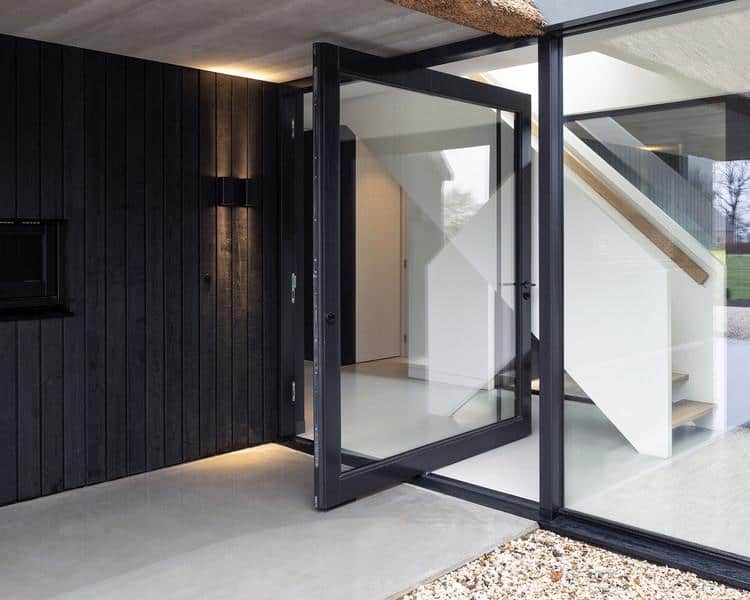
- Space efficiency: Rotating around a central pivot point instead of swinging on a side hinge lets a pivot door open in either direction, which can work better in tight or unusually shaped spaces where a standard swing door would be impractical.
- Durability: The pivot mechanism distributes the door’s weight across both the floor and ceiling rather than concentrating stress on a single side frame, which reduces the likelihood of warping over time.
- Accessibility: Pivot doors typically open with a wider arc than hinged doors, making passage easier — a meaningful benefit for wheelchair users or anyone navigating with mobility aids, and part of why they show up often in busy commercial entrances.
Materials and Customization
Pivot doors are available in a range of materials, each with a different character:
- Wood: Brings warmth and natural texture, from rich mahogany to lighter oak, spanning rustic to modern looks.
- Glass: Offers a sleek, contemporary feel and lets in significantly more natural light; frosted or tinted glass adds privacy without losing that light.
- Metal: Known for strength and durability, capable of a minimalist industrial look or a more traditional finish depending on treatment.
Beyond material, pivot doors can be customized in size (from grand front entrances to smaller interior doors), color (natural finishes to bold painted colors), and overall style, from clean modern lines to more intricate detailing.
Pivot Doors in Modern Architecture
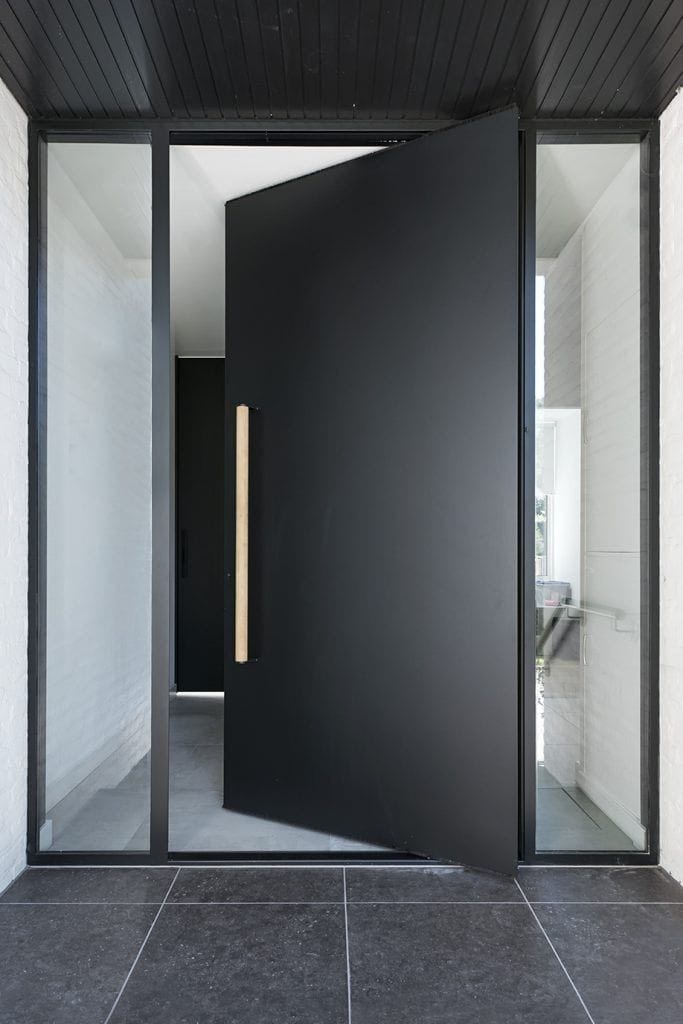
Pivot doors have become common in both residential and commercial settings — from minimalist urban lofts to expansive estates, and in hotels, restaurants, and office buildings where they need to handle heavy foot traffic while still making a strong first impression.
Cost and Installation
Pivot doors typically cost more than traditional hinged doors, largely due to their size and the complexity of the pivot mechanism — but many homeowners see the investment as worthwhile given the aesthetic and functional payoff.
Installation requires precise measurement of both the opening and the door itself, accounting for weight and dimensions. Structural reinforcement at the floor and ceiling pivot points is essential, especially for larger or heavier doors, and high-quality pivot hardware needs to be installed exactly per the manufacturer’s specifications, with careful attention to floor clearance for smooth operation.
For exterior pivot doors, weatherproofing matters just as much as alignment — proper seals and gaskets prevent water and air infiltration, which affects both energy efficiency and interior protection. Given the weight involved and the precision required for smooth, safe operation, professional installation is strongly recommended, though experienced DIYers with the right tools can take it on.
Conclusion
Pivot doors combine a genuinely old architectural mechanism with a distinctly modern look — larger panels, a cleaner frameless appearance, and a wider, more accessible opening arc than hinged doors typically allow. They cost more upfront and installation takes real precision, but for anyone building a striking entrance, they remain one of the more effective ways to do it.
For more on doors and design, explore the rest of Door Digest.