Stained Glass Doors
Disclaimer Some links on this page are Amazon affiliate links which means if you choose to make a purchase, we may earn a small commission from Amazon at no extra cost to you. We greatly appreciate your support!
Stained glass doors bring color, privacy, and a genuine sense of craftsmanship to an entryway — a design element that’s been around far longer than most home features. This guide covers where stained glass actually comes from, how it’s used in homes today, the practical benefits, and what to consider before choosing one.
The History and Timeless Appeal of Stained Glass
Stained glass has been used for centuries — colored glass assembled into patterned windows dates back to ancient Rome, but the art form reached its peak between 1150 and 1500, when European cathedrals used elaborate stained glass windows both for decoration and to tell religious stories to a largely illiterate population. That craftsmanship — vibrant color, intricate leadwork, and light manipulation — is exactly what still makes stained glass feel distinctive today, whether it’s in a church window or a front door.
In recent years, the art form has moved well beyond windows. Architects and interior designers now incorporate stained glass into doors and other modern applications, blending centuries-old technique with contemporary design.
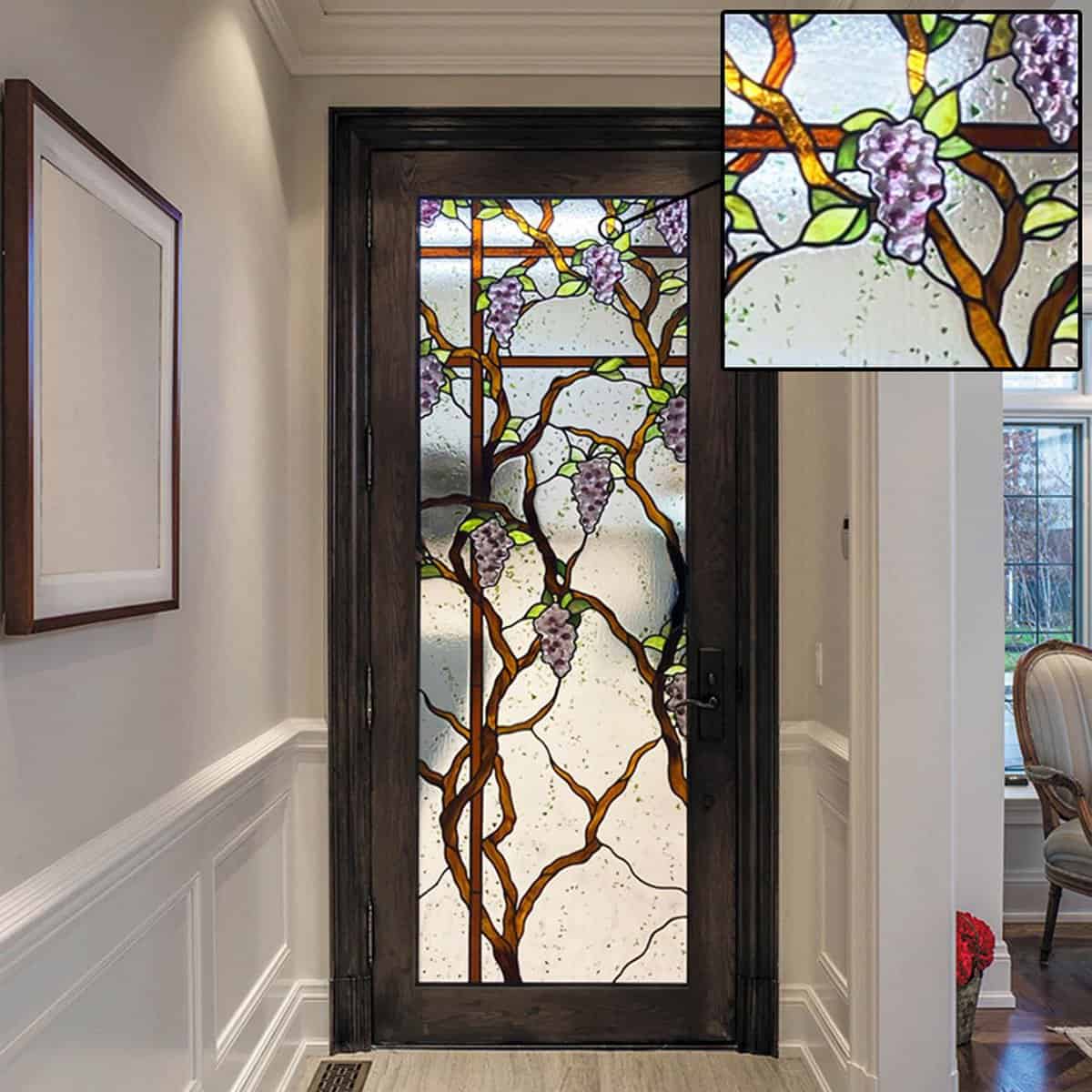
Stained Glass Doors in Contemporary Home Design
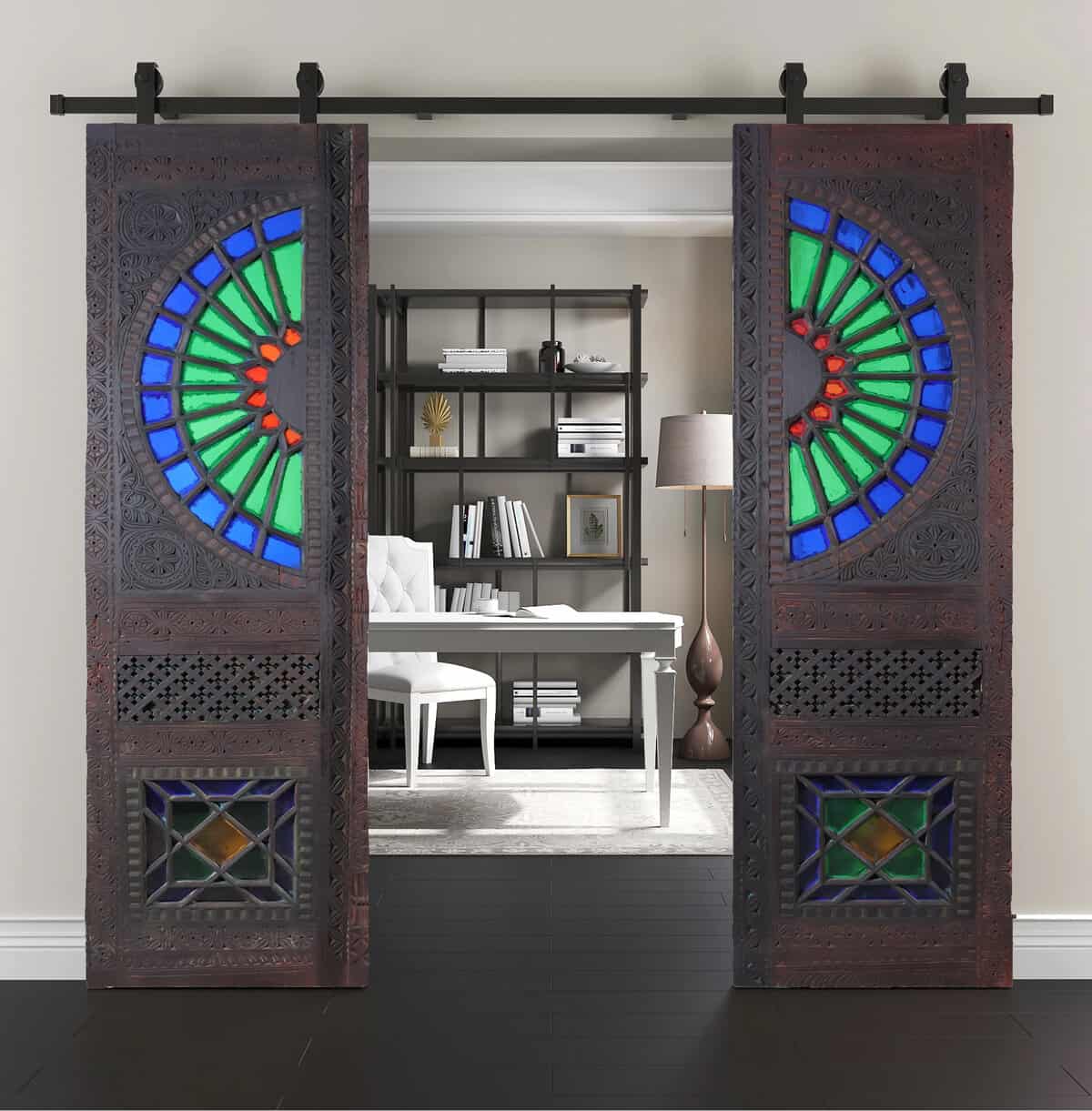
Stained glass doors aren’t limited to front entrances anymore — homeowners now use them for interior doors, patio doors, and even shower doors. That range of application is part of what makes them such a versatile design fusion of tradition and modern style.
Designs span a wide spectrum, from classic floral patterns to sleek geometric compositions, so there’s usually an option that fits a home’s existing aesthetic rather than clashing with it. Beyond the visual variety, stained glass genuinely plays with light in a way plain glass doesn’t — filling a room with colorful, dappled light during the day, and turning an entrance into a striking visual feature when lit from within at night.
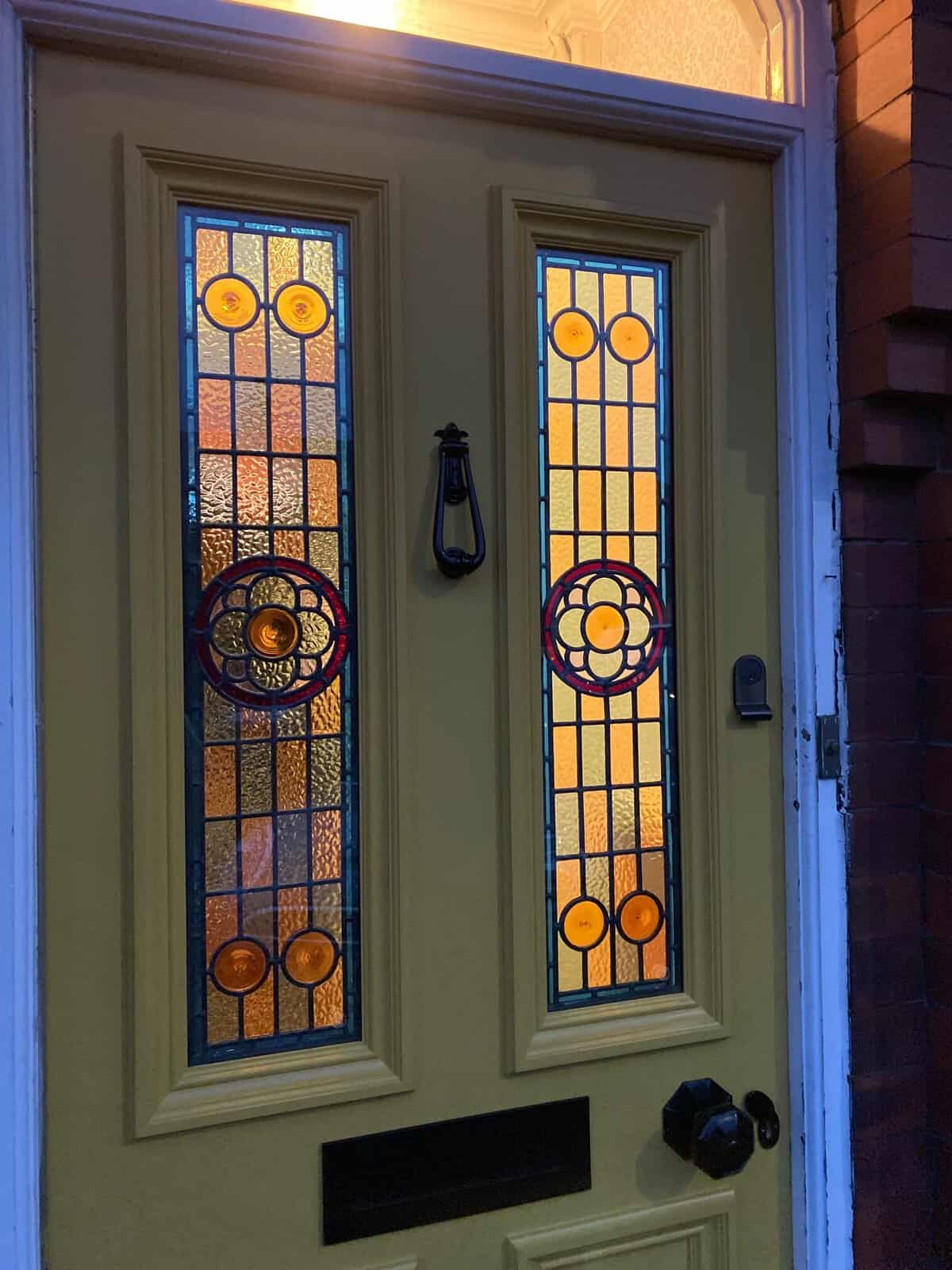
Benefits of Stained Glass Doors
- Aesthetic appeal: A distinctive visual charm, with enough pattern and color variety to create a genuinely customized look.
- Increased privacy: Unlike clear glass, stained glass obscures the view into your home while still letting in natural light — similar in spirit to how fiberglass doors balance privacy and light.
- Natural light: Filters daylight into a space, creating a warmer feel and reducing reliance on artificial lighting.
- A genuine focal point: A stained glass door tends to draw the eye and anchor a room’s design in a way a plain door can’t.
- Potential home value boost: As a distinctive, well-crafted feature, it can help a home stand out in a competitive market.
- Durability: Despite looking delicate, well-made stained glass doors are built for daily use and can last for decades with proper care.
How to Choose the Right Stained Glass Door
Design, color, and placement all matter here. A modern home generally suits clean lines and a more restrained, monochrome palette, while a traditional home can carry more ornate, colorful patterns well.
Placement matters just as much as the design itself — a stained glass door gets the most out of its colors and patterns when it receives plenty of natural light. Since stained glass is more fragile than standard glass, factor in maintenance and cleaning requirements before committing, and consider pairing the door with additional security measures for peace of mind.
Conclusion
Stained glass doors offer something genuinely rare in home design — a centuries-old craft that still reads as fresh and distinctive today. Whether you’re drawn to a classic floral pattern or something more geometric and modern, getting the placement and maintenance right means it’ll remain a standout feature of your home for years.
For more on doors and design, explore the rest of Door Digest.